
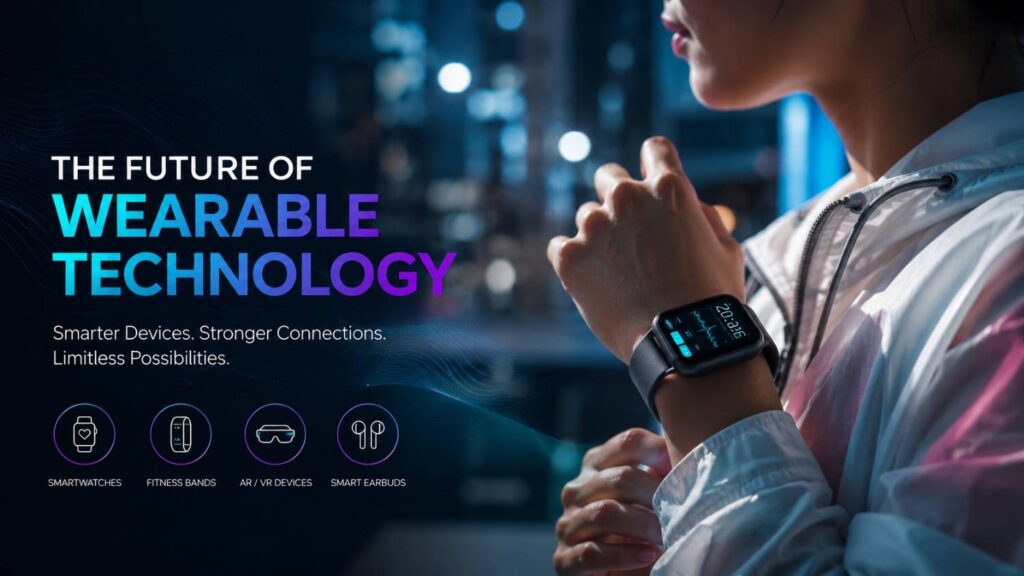
The Future of Wearable Technology: Trends for 2026
Wearable technology is entering a more mature and intelligent stage in 2026, transforming from simple companion devices into essential tools for everyday life. While early wearables primarily focused on counting steps, tracking workouts, and displaying smartphone notifications, modern devices are becoming far more capable. Today’s ecosystem includes smart rings, advanced fitness bands, connected earbuds, smart glasses, biometric skin patches, AI-powered health monitors, and other connected devices that seamlessly integrate into daily routines. As innovation continues to accelerate, wearables are becoming more personalized, accurate, and practical for users across different lifestyles.
The Future of Wearable Technology: Trends for 2026 extends far beyond introducing smaller or more stylish gadgets. The industry’s focus has shifted toward delivering meaningful value through continuous health monitoring, intelligent automation, context-aware computing, and seamless connectivity between devices. Advances in artificial intelligence, low-power processors, flexible sensors, and cloud computing allow wearables to analyze data in real time and provide personalized insights that help users make informed decisions about their health, productivity, and overall well-being.
Healthcare is expected to remain one of the biggest drivers of wearable technology in 2026. Modern wearable devices are increasingly capable of monitoring heart rate variability, blood oxygen levels, sleep quality, stress patterns, physical activity, body temperature, and other biometric indicators with impressive accuracy. Many devices now provide early warnings about potential health concerns, encourage preventive care, and generate reports that users can share with healthcare professionals. This shift moves wearables beyond fitness tracking into becoming valuable tools for long-term health management and proactive wellness.
Perhaps the most significant trend shaping wearable technology in 2026 is the emphasis on creating devices that blend naturally into everyday life. Users no longer want technology that constantly interrupts them with notifications or demands attention. Instead, they prefer wearables that quietly collect meaningful information, deliver timely assistance only when needed, protect personal privacy, and integrate effortlessly into their daily routines. As artificial intelligence becomes more sophisticated and sensors continue to improve, wearable technology is evolving from a collection of smart gadgets into an intelligent personal ecosystem that supports healthier, safer, and more connected lifestyles.
Why Wearable Technology Is Growing in 2026
Wearable technology is experiencing rapid growth in 2026 because it provides continuous, real-time insights that traditional devices cannot easily capture. Unlike smartphones, which mainly record digital interactions such as searches, messages, or purchases, wearable devices remain in constant contact with the user throughout the day. This allows them to collect valuable biometric and behavioral data, including movement, sleep patterns, heart activity, stress levels, recovery, and other health-related signals. The ability to gather this information automatically makes wearables increasingly useful for improving everyday health, productivity, and overall well-being.
Another reason for this growth is the increasing demand for personalized technology. Consumers no longer want devices that simply display notifications or count daily steps. They expect intelligent wearables that understand their habits, provide meaningful recommendations, and adapt to individual lifestyles. Advances in artificial intelligence, sensor technology, battery efficiency, and wireless connectivity have made it possible for wearable devices to deliver more accurate insights while becoming smaller, lighter, and more comfortable to wear throughout the day.
Businesses, healthcare providers, fitness professionals, and technology companies are also driving adoption by integrating wearable data into broader digital ecosystems. Wearables now connect with smartphones, cloud platforms, electronic health records, smart home systems, and workplace wellness programs, allowing users to access more comprehensive insights from a single connected environment. This growing ecosystem continues to expand the practical value of wearable technology beyond fitness tracking alone.
Health Is Becoming the Main Use Case
Health monitoring has become the primary reason many consumers purchase wearable devices in 2026. Rather than focusing only on daily step counts, users increasingly expect wearables to provide detailed information about sleep quality, heart rate trends, blood oxygen levels, stress patterns, recovery, menstrual cycle tracking, body temperature, and overall wellness. These continuous measurements help users better understand their health and make proactive lifestyle decisions before small issues become larger concerns.
Modern wearable devices combine advanced sensors with artificial intelligence to identify patterns that may not be immediately noticeable through occasional medical checkups. They can monitor changes over time, detect irregular heart rhythms, evaluate recovery after exercise, and encourage healthier daily habits through personalized recommendations. This shift has transformed wearables from simple fitness accessories into valuable personal health companions.
Healthcare organizations are also recognizing the growing importance of wearable technology. Regulatory agencies such as the FDA continue evaluating sensor-based digital health technologies, including smartwatches, smart rings, wearable patches, and fitness bands, when they are authorized as medical devices. As wearable sensors become more accurate and clinically validated, their role in preventive healthcare and remote patient monitoring is expected to continue expanding.
Consumers Want Less Screen Time
As digital fatigue becomes more common, many consumers are actively searching for ways to stay connected without spending more time looking at screens. Wearable technology offers a practical solution by delivering important information through subtle notifications, voice interactions, vibrations, or glanceable displays rather than requiring constant smartphone use. This allows users to remain informed while reducing unnecessary screen exposure.
Devices such as smart rings, connected earbuds, and lightweight smart glasses represent this shift toward ambient computing. Instead of demanding attention throughout the day, these wearables quietly collect information in the background and provide updates only when necessary. This creates a more natural relationship between users and technology while minimizing distractions during work, exercise, or personal activities.
Reducing screen dependence also supports better mental well-being and productivity. By limiting unnecessary phone usage while still providing timely information, wearable technology helps users maintain focus, improve time management, and create healthier digital habits without sacrificing convenience.
AI Makes Wearables More Personal
Artificial intelligence is becoming one of the defining technologies behind wearable innovation in 2026. Rather than simply displaying raw health metrics, AI-powered wearables analyze multiple data points simultaneously to generate personalized insights that are easier to understand and apply in everyday life. This transforms wearable devices from passive data collectors into intelligent personal assistants.
For example, an AI-powered wearable may detect reduced sleep quality, an elevated resting heart rate, lower daily activity, and increased stress levels over several days. Instead of presenting separate measurements, it can recognize the overall pattern and recommend practical actions such as reducing workout intensity, improving hydration, adjusting bedtime routines, or scheduling additional recovery. These personalized suggestions help users make informed decisions based on their overall health rather than isolated statistics.
As AI models continue learning from long-term user behavior, wearable devices will become increasingly accurate at understanding individual habits and predicting future needs. This level of personalization is expected to improve health management, enhance productivity, and create more meaningful user experiences, making artificial intelligence one of the most influential drivers of wearable technology’s future.
Top Wearable Technology Trends 2026
Wearable technology trends in 2026 show a clear shift from simple fitness tracking toward intelligent, personalized, and always-connected devices that support everyday life. Consumers now expect wearables to do much more than count steps or display smartphone notifications. They want devices that provide meaningful health insights, simplify daily routines, integrate seamlessly with other technology, and deliver information only when it is truly useful. As artificial intelligence, advanced sensors, and low-power processors continue to improve, wearables are becoming more capable without becoming more intrusive.
Another defining trend is the growing focus on comfort and long-term usability. Manufacturers are designing devices that are lighter, smaller, and easier to wear throughout the day and night. Instead of bulky gadgets that constantly demand attention, the latest wearable products emphasize subtle interaction, longer battery life, improved accuracy, and seamless integration into everyday clothing and accessories. This evolution is making wearable technology more appealing to a wider range of users beyond fitness enthusiasts.
Trust is also becoming a major factor in wearable adoption. Consumers increasingly expect strong privacy protections, secure handling of personal health data, and transparent use of artificial intelligence. Companies that combine reliable health monitoring with responsible data practices are expected to gain a competitive advantage as wearable technology becomes an essential part of daily life.
| Technology | What It Enables | User Benefit | Expected Impact in 2026 |
|---|---|---|---|
| Artificial Intelligence (AI) | Personalized health analysis | Smarter recommendations and predictive insights | Very High |
| Advanced Biosensors | Continuous biometric monitoring | More accurate wellness tracking | Very High |
| Low-Power Processors | Efficient on-device computing | Longer battery life | High |
| Cloud Connectivity | Secure data synchronization | Access across multiple devices | High |
| Bluetooth LE & Wireless Connectivity | Device-to-device communication | Seamless ecosystem integration | High |
| Flexible Sensors | Comfortable wearable designs | Better long-term wearability | Medium to High |
| Edge Computing | Faster on-device processing | Reduced latency and improved privacy | High |
AI-Powered Health Insights
Artificial intelligence is expected to be one of the most significant advancements in wearable technology during 2026. The true value of AI is no longer limited to collecting biometric information—it lies in interpreting that information in ways users can easily understand. Instead of overwhelming people with raw numbers and graphs, AI-powered wearables analyze trends over time and convert complex health data into personalized recommendations that support better daily decisions.
Modern wearable devices combine information from multiple sensors, including sleep quality, heart rate variability, physical activity, stress levels, recovery status, and body temperature. AI algorithms examine how these metrics interact rather than evaluating each one individually. This provides users with a more complete understanding of their overall health and allows wearables to recommend practical actions such as improving sleep habits, adjusting exercise intensity, increasing hydration, or managing stress more effectively.
As machine learning models continue improving through long-term user data, AI-powered wearables will become increasingly personalized. Rather than offering the same advice to every user, future devices will learn individual routines, recognize behavioral patterns, and provide recommendations tailored to each person’s unique health profile and lifestyle.
Smart Rings Become Mainstream
Smart rings are becoming one of the fastest-growing categories in wearable technology because they offer many of the health-tracking capabilities of smartwatches in a much smaller and more discreet form factor. Their lightweight design makes them comfortable for continuous wear, especially during sleep, allowing users to collect high-quality overnight health data without wearing a larger device on the wrist.
Modern smart rings are equipped with advanced sensors capable of monitoring heart rate, blood oxygen levels, sleep quality, body temperature, activity, stress, and recovery. Despite their compact size, improvements in sensor technology and battery efficiency have enabled these devices to deliver increasingly accurate health insights while maintaining several days of battery life between charges.
Industry events such as CES have highlighted smart rings as one of the most promising wearable categories for 2026. Their combination of discreet design, continuous health monitoring, and growing AI capabilities positions them as an attractive option for users seeking health-focused technology that fits naturally into everyday life.
Smart Glasses Move Beyond Hype
Smart glasses are steadily evolving from experimental technology into practical wearable devices designed for everyday use. Early generations focused heavily on augmented reality demonstrations, but newer products emphasize lightweight designs, voice interaction, audio assistance, hands-free communication, navigation, translation, photography, and AI-powered personal assistance without distracting users from their surroundings.
Advances in artificial intelligence, miniaturized processors, microphones, speakers, and battery technology are making smart glasses significantly more useful than previous generations. Many display-less smart glasses now focus on delivering contextual information through voice rather than traditional visual displays, creating a more natural and less intrusive user experience.
Market forecasts indicate strong long-term growth for this category. Industry research from IDC projects that shipments of display-less smart glasses could reach approximately 13.6 million units in 2026, increasing to 27.3 million units by 2030. This steady growth reflects rising consumer interest in hands-free wearable technology that combines convenience, artificial intelligence, and seamless everyday functionality.
Wearable Tech Categories to Watch
The future of wearable technology will not be defined by a single device. Instead, the market is evolving into a diverse ecosystem where different types of wearables serve different purposes based on individual needs, lifestyles, and preferences. Some users prioritize comprehensive health monitoring, while others value fitness tracking, hands-free communication, or productivity features. As technology continues to advance, consumers will increasingly choose wearable devices according to comfort, functionality, design, battery life, and budget rather than relying on one product to meet every requirement.
Another important trend is the growing integration between wearable devices. Instead of functioning independently, smartwatches, smart rings, earbuds, smart glasses, and health sensors are becoming part of connected ecosystems that share data and work together. This allows users to receive more complete insights into their health, daily habits, and productivity while enjoying a seamless experience across multiple devices. Manufacturers are focusing on interoperability to create wearable ecosystems that feel more intuitive and valuable over time.
As wearable technology becomes more specialized, each product category is expected to continue improving in areas where it performs best. Rather than competing directly, many wearable devices will complement one another, giving users greater flexibility to build a personalized collection of devices that matches their daily routines and long-term goals.
| Wearable Category | Primary Purpose | Key Features | Best For |
|---|---|---|---|
| Smartwatches | All-in-one wearable experience | Health tracking, notifications, GPS, payments, apps | Everyday users wanting multiple features |
| Fitness Trackers | Activity and fitness monitoring | Steps, workouts, heart rate, sleep tracking | Fitness-focused users |
| Smart Rings | Passive wellness monitoring | Sleep, recovery, heart rate, body temperature | Users who prefer discreet wearables |
| Smart Glasses | Hands-free AI assistance | Voice controls, navigation, translation, camera | Productivity and daily convenience |
| Health Patches | Continuous medical monitoring | Biometric sensors, remote patient monitoring | Healthcare and clinical use |
| Smart Clothing | Movement and performance tracking | Embedded sensors for posture and motion | Athletes and sports training |
| AI Earbuds | Audio-based smart assistance | Voice assistant, translation, notifications | Hands-free communication |
Smartwatches and Fitness Trackers
Smartwatches and fitness trackers are expected to remain the most widely used wearable devices because they offer a broad combination of health, fitness, communication, and productivity features. Modern smartwatches can monitor heart rate, sleep quality, physical activity, stress levels, blood oxygen saturation, and workout performance while also providing smartphone notifications, music controls, contactless payments, navigation, voice assistants, and emergency safety features.
Fitness trackers continue to appeal to users who prefer lightweight devices with long battery life and a stronger focus on health monitoring. Many newer models include advanced metrics such as recovery analysis, heart rate variability, guided workouts, and personalized fitness recommendations powered by artificial intelligence. Their lower price compared to premium smartwatches also makes them accessible to a wider audience.
For many consumers, smartwatches remain the most familiar entry point into wearable technology because they combine multiple capabilities in a single device. Continued improvements in battery efficiency, sensor accuracy, and AI-powered health insights are expected to keep this category at the center of the wearable technology market throughout 2026 and beyond.
Smart Rings and Sleep Devices
Smart rings are emerging as one of the fastest-growing wearable categories due to their compact design and ability to provide continuous health monitoring without disrupting daily activities. Their small size makes them particularly comfortable for overnight wear, allowing users to collect accurate sleep and recovery data while avoiding the bulkiness that some people associate with traditional smartwatches.
Many smart rings now monitor sleep stages, resting heart rate, body temperature, blood oxygen levels, stress indicators, and recovery metrics throughout the day and night. Because they are designed primarily for passive health monitoring rather than active interaction, they appeal to users who want meaningful health insights without constant notifications or screen-based distractions.
Although smart rings are unlikely to replace smartwatches for GPS navigation, workout tracking, messaging, or mobile payments, they offer a valuable alternative for individuals focused on long-term wellness and recovery. Their discreet appearance, extended battery life, and growing AI capabilities make them an increasingly attractive option for users seeking simple yet effective health monitoring.
Smart Glasses and AR Wearables
Smart glasses are expected to become one of the most innovative wearable categories as artificial intelligence and augmented reality technologies continue to mature. Rather than acting as miniature smartphone screens, many modern smart glasses focus on delivering hands-free assistance through voice interaction, built-in cameras, audio playback, live translation, navigation, messaging, and AI-powered contextual information that enhances everyday activities.
Some smart glasses prioritize lightweight, display-free designs that provide information through voice assistants and open-ear speakers, while others are advancing toward augmented reality experiences capable of displaying digital content directly within the user’s field of vision. These developments have the potential to transform how people interact with digital information at work, while traveling, or during everyday tasks.
Despite significant progress, several challenges remain before smart glasses achieve widespread adoption. Manufacturers must continue improving comfort, battery life, privacy protection, display quality, affordability, and real-world usefulness. As these challenges are addressed, smart glasses have the potential to become one of the most important wearable interfaces for artificial intelligence and next-generation personal computing.
Comparison of Major Wearable Trends in 2026
Wearable technology in 2026 is more diverse than ever, with each category designed to address specific user needs rather than serving as a universal solution. Smartwatches, fitness trackers, smart rings, smart glasses, and specialized health wearables each offer unique strengths, making it important for consumers to understand what they want to achieve before making a purchase. Instead of focusing on marketing trends or the newest releases, buyers should evaluate how a wearable fits into their daily routine and whether its features genuinely solve their specific problems.
One of the biggest trends shaping the wearable market is specialization. Smartwatches continue to provide an all-in-one experience by combining health monitoring, communication, payments, navigation, and fitness tracking. Smart rings, on the other hand, prioritize discreet health monitoring and sleep analysis, while smart glasses focus on hands-free access to information, artificial intelligence, and productivity. Each product category excels in different situations, meaning there is no single wearable that is ideal for every user.
Choosing the right wearable depends on factors such as health goals, activity level, preferred form factor, battery life, comfort, privacy expectations, and budget. Users who want comprehensive daily functionality may prefer a smartwatch, while those seeking passive wellness tracking may find a smart ring more suitable. Similarly, professionals looking for hands-free assistance may benefit most from smart glasses. Understanding these differences helps consumers invest in devices that provide meaningful long-term value rather than purchasing technology based solely on popularity or hype.
Wearable Trend Comparison Table
| Wearable Trend | Best Use | Main Benefit | Main Challenge |
|---|---|---|---|
| Smartwatches | Fitness, notifications, health tracking | Broad features in one device | Needs regular charging |
| Smart rings | Sleep, recovery, subtle health tracking | Comfortable and screen-free | Limited display and workout features |
| Smart glasses | Hands-free AI and quick information | Natural access to assistance | Privacy and social acceptance |
| Health patches | Medical or continuous monitoring | More focused health data | May need clinical validation |
| Smart clothing | Sports and movement tracking | Sensor data from the body | Cost and durability concerns |
| AI earbuds | Voice assistance and translation | Always-available audio interface | Battery and privacy issues |
How to Choose the Right Wearable
Choosing the right wearable technology starts with identifying your primary goal rather than simply purchasing the newest or most popular device. Modern wearables are designed for different purposes, so selecting the right one depends on how you plan to use it in your daily life. Whether your focus is improving fitness, monitoring your health, increasing productivity, or reducing smartphone usage, understanding your priorities will help you invest in a device that delivers lasting value instead of unnecessary features.
It is also important to consider practical factors such as comfort, battery life, compatibility with your smartphone, data privacy, durability, and long-term software support. A wearable that feels uncomfortable or requires frequent charging may not fit naturally into your routine, regardless of how advanced its features are. Likewise, choosing a device from a manufacturer with a strong reputation for updates and security helps ensure your wearable remains reliable for years to come.
Rather than trying to find one device that does everything, focus on the wearable that best supports your most important daily activities. As wearable technology continues to evolve, many users are combining multiple devices—such as a smartwatch with a smart ring—to take advantage of the strengths each category offers while creating a more personalized and connected experience.
Wearables and the Future of Healthcare
Healthcare is expected to remain one of the most influential areas driving the future of wearable technology in 2026. As wearable devices become more accurate and intelligent, they are evolving from simple fitness accessories into valuable health monitoring tools that support both individuals and healthcare professionals. Continuous tracking of biometric data allows users to better understand their daily health patterns while enabling earlier awareness of potential changes that may require attention. This shift is helping move healthcare toward a more proactive and preventive model rather than one focused solely on treating illness after symptoms appear.
Advances in wearable sensors, artificial intelligence, cloud computing, and secure data sharing are making it easier to monitor health outside traditional medical settings. Many modern wearables can collect information throughout the day without disrupting normal activities, giving users a more complete picture of their overall well-being. Healthcare providers are also exploring ways to incorporate wearable data into patient care, research, and chronic disease management to improve outcomes while reducing unnecessary clinic visits.
Although wearable technology continues to improve rapidly, it is important to recognize its role as a supportive tool rather than a complete replacement for professional medical care. When used responsibly alongside guidance from qualified healthcare providers, wearable devices can encourage healthier habits, improve long-term health awareness, and help individuals make more informed decisions about their well-being.
Remote Patient Monitoring
Remote patient monitoring has become one of the most promising applications of wearable technology in modern healthcare. Wearable devices allow healthcare professionals to collect health information from patients while they remain at home, reducing the need for frequent in-person appointments and enabling more continuous observation of important health indicators. This approach is particularly valuable for managing chronic conditions, supporting recovery after medical procedures, and monitoring individuals who require ongoing care.
Modern wearable devices can continuously record metrics such as heart rate, physical activity, sleep quality, blood oxygen levels, body temperature, and other physiological measurements. These data can be securely transmitted to healthcare providers, allowing them to identify significant changes more quickly and respond when necessary. Continuous monitoring also helps create a more complete understanding of a patient’s health than occasional clinic visits alone.
Regulatory organizations such as the FDA recognize the growing role of digital health technologies in clinical research and healthcare. FDA guidance explains that wearable and remote monitoring technologies can collect data outside traditional clinical settings, making participation in clinical investigations more convenient while supporting more continuous and comprehensive health data collection.
Preventive Health and Daily Awareness
One of the greatest strengths of wearable technology is its ability to promote preventive healthcare by helping users become more aware of changes in their daily health patterns. Rather than waiting for noticeable symptoms to appear, wearables continuously monitor physiological signals that may indicate shifts in overall wellness. This ongoing awareness encourages users to take proactive steps toward maintaining good health.
For example, a wearable device may identify gradual increases in resting heart rate, reduced sleep quality, elevated stress levels, unusual body temperature patterns, or decreased physical activity. While these changes do not necessarily indicate illness, they can encourage users to improve hydration, prioritize rest, adjust exercise intensity, reduce stress, or seek professional medical advice when appropriate.
By providing consistent feedback about everyday health habits, wearable technology helps users make small lifestyle adjustments before minor issues become larger concerns. This emphasis on prevention supports healthier long-term behaviors and contributes to improved overall well-being.
Medical Claims Need Evidence
Although many wearable devices include advanced health-monitoring capabilities, not every wearable should be considered a medical device. Some products are designed primarily for general wellness, fitness tracking, or lifestyle improvement, while others may require regulatory authorization because they make specific medical claims or are intended to assist in diagnosing, treating, or monitoring medical conditions.
This distinction is important because wellness devices and regulated medical devices are evaluated under different standards. Medical-grade wearables typically undergo additional testing and regulatory review to demonstrate safety, accuracy, and effectiveness before they are approved for specific healthcare purposes. Consumers should understand these differences when evaluating the capabilities of wearable technology.
Wearable devices can provide valuable health insights and encourage healthier habits, but they should not replace professional medical evaluation or treatment. Users should view wearable technology as a supportive tool that complements healthcare rather than a substitute for qualified medical advice, diagnosis, or ongoing care from licensed healthcare professionals.
Privacy, Security, and Trust in Wearables
As wearable technology becomes more advanced, privacy and security are becoming just as important as performance and features. Modern wearable devices continuously collect large amounts of personal information, including health metrics, activity patterns, location history, and behavioral data. While this information allows wearables to deliver personalized insights and improve user experiences, it also creates important responsibilities for manufacturers to protect sensitive data and use it transparently. Trust will play a major role in determining which wearable brands succeed in 2026 and beyond.
Consumers are becoming increasingly aware of how their personal information is collected, stored, and shared. Rather than focusing only on battery life or new features, many buyers now consider a company’s privacy practices before purchasing a wearable device. Clear privacy policies, secure data encryption, regular software updates, and transparent user controls are becoming essential expectations instead of optional benefits. Companies that prioritize responsible data management are more likely to build long-term customer confidence.
As wearable ecosystems continue expanding through artificial intelligence and cloud-based services, users should remain informed about how their information is handled. Understanding privacy settings, reviewing app permissions, and choosing reputable manufacturers can significantly reduce security risks while allowing users to enjoy the benefits of wearable technology with greater peace of mind.
Personal Data Is the Biggest Concern
Wearable devices collect some of the most sensitive personal information available through consumer technology. Depending on the device, this may include heart rate, sleep quality, physical activity, body temperature, blood oxygen levels, stress patterns, voice recordings, location history, and other biometric signals. Together, these data provide detailed insights into a person’s daily life, health, and routines, making proper protection essential.
Although this information helps deliver personalized recommendations and improve health tracking, it should be handled responsibly. Users should carefully review the privacy settings provided by both the wearable device and its companion application to understand exactly what information is collected and how it is used. Many devices also allow users to control which data are shared with cloud services or third-party applications.
Before granting permissions, users should verify that every requested permission is necessary for the wearable’s intended functionality. Avoiding unnecessary access to contacts, microphones, cameras, or location services helps minimize privacy risks while maintaining greater control over personal information.
Smart Glasses Raise New Questions
Smart glasses introduce additional privacy considerations because many models include built-in cameras, microphones, speakers, location services, and artificial intelligence features capable of collecting information from the surrounding environment. Unlike traditional wearables that mainly monitor the user, smart glasses may also capture images, audio, or contextual information involving other people nearby.
These capabilities raise important questions about transparency, consent, and responsible use in public spaces. Manufacturers must clearly communicate when recording is active, explain how captured information is processed, and provide users with straightforward controls for enabling or disabling features such as cameras and microphones. Visible recording indicators and strong privacy protections help reduce concerns among both users and the general public.
Building public trust will be essential for widespread adoption of smart glasses. Without clear privacy standards, responsible design, and transparent data practices, many consumers may remain hesitant to use wearable devices capable of recording their surroundings.
A Simple Wearable Privacy Checklist
Before purchasing or using any wearable device, it is worth taking a few minutes to evaluate its privacy and security practices. Understanding how a company manages personal information can help you make more informed decisions and reduce the risk of unnecessary data exposure. A trustworthy wearable should provide clear explanations about its data collection practices and allow users to control their own information.
When evaluating a wearable device, consider the following questions:
- Does the company clearly explain what personal data the device collects?
- Can you view, download, or permanently delete your personal data?
- Can you disable features such as location tracking, microphone access, or camera permissions when they are not needed?
- Does the device require cloud storage, or can important functions operate locally on the device?
- Does the company share your information with advertisers, partners, or other third parties, and can you opt out if desired?
Reviewing these questions before making a purchase helps ensure that your wearable not only meets your functional needs but also aligns with your expectations for privacy, security, and long-term trust.
What Businesses Should Do With Wearable Technology in 2026
Wearable technology is creating new opportunities not only for consumers but also for businesses across healthcare, fitness, insurance, manufacturing, logistics, sports, and software development. As wearable adoption continues to grow, organizations have the opportunity to develop products and services that deliver real value through health monitoring, workplace safety, productivity improvement, customer engagement, and personalized digital experiences. However, long-term success will depend on solving genuine user problems instead of adding wearable features simply because the technology is available.
Businesses should also recognize that trust is becoming one of the most valuable competitive advantages in the wearable market. Users are increasingly willing to share personal information only with companies that demonstrate strong privacy protections, transparent data practices, and responsible use of artificial intelligence. Organizations that prioritize user experience, data security, and practical functionality are more likely to build lasting customer relationships than those that focus solely on introducing new hardware features.
Another important consideration is building wearable solutions that integrate naturally into existing digital ecosystems. Applications that connect seamlessly with smartphones, cloud platforms, healthcare systems, fitness services, or workplace software provide greater long-term value than isolated products. Businesses that focus on interoperability, simplicity, and measurable user benefits will be better positioned as wearable technology continues to evolve.
Build Around Real User Problems
Successful wearable products begin by solving a clearly defined problem rather than introducing technology for its own sake. Before developing a wearable device or application, businesses should identify the specific challenge users face and determine how wearable technology can improve their daily experience. Products that address meaningful needs are far more likely to achieve long-term adoption than those built around novelty alone.
For example, fitness companies can develop wearables that provide personalized coaching, recovery analysis, and long-term performance tracking instead of simply counting steps. Healthcare providers can use wearable devices to support remote patient monitoring, chronic disease management, medication adherence, and preventive care. Employers may implement wearables to improve workplace safety, monitor fatigue, or reduce occupational risks, provided that employee privacy and consent remain central to the implementation.
The most successful wearable innovations are those that integrate naturally into everyday life and deliver measurable benefits without creating unnecessary complexity. Practical, user-focused solutions consistently outperform products that prioritize impressive technology over real-world usefulness.
Design for Comfort and Battery Life
No matter how advanced a wearable device may be, users are unlikely to continue wearing it if it is uncomfortable, bulky, unattractive, or requires frequent charging. Comfort has become one of the most important design priorities because wearable devices are intended for continuous use throughout the day and often during sleep. Lightweight materials, ergonomic designs, and durable construction all contribute to a better long-term user experience.
Battery life is equally important. Consumers increasingly expect wearable devices to operate for several days—or even weeks—without requiring constant charging. Longer battery life allows users to collect more continuous health data while reducing interruptions and improving overall convenience. Manufacturers are investing heavily in energy-efficient processors, low-power sensors, and optimized software to meet these expectations.
Simple and intuitive design also plays a major role in user satisfaction. Clear interfaces, easy setup, minimal maintenance, and discreet form factors encourage consistent daily use. This growing preference for comfortable, low-profile devices explains why categories such as smart rings and lightweight smart glasses are attracting increasing attention in the wearable technology market.
Use AI Carefully
Artificial intelligence has enormous potential to improve wearable technology, but it must be implemented responsibly and transparently. The primary purpose of AI should be to help users understand complex health and activity data rather than overwhelm them with technical information or unsupported conclusions. Well-designed AI systems translate raw measurements into practical recommendations that users can easily understand and apply in everyday life.
Businesses should ensure that AI-generated insights remain evidence-based and clearly distinguish between wellness guidance and medical advice. For example, a wearable might safely report that sleep quality has decreased over several nights or that recovery appears slower than usual, allowing users to make informed lifestyle adjustments. However, AI should avoid presenting unverified medical diagnoses or making health claims that are not supported by appropriate clinical evidence.
Responsible AI development also requires transparency about how recommendations are generated, what data are analyzed, and what limitations exist. By focusing on explainable, trustworthy, and user-centered artificial intelligence, businesses can strengthen customer confidence while delivering wearable experiences that are both valuable and ethically responsible.
Quick Answer About The Future of Wearable Technology: Trends for 2026
The Future of Wearable Technology: Trends for 2026 is centered on making wearable devices smarter, more personalized, and more integrated into everyday life. Modern wearables are evolving far beyond basic step counting by combining advanced sensors with artificial intelligence to deliver meaningful health insights, improve daily wellness, and simplify interactions with technology. Instead of simply collecting data, the latest generation of wearable devices is designed to interpret health metrics, identify long-term trends, and provide practical recommendations that help users make informed lifestyle decisions.
The biggest trends include AI-powered health insights, smart rings, advanced smart glasses, medical-grade monitoring capabilities, and smaller, less intrusive devices that users can comfortably wear throughout the day and night. Today’s wearables are capable of tracking sleep quality, heart rate, blood oxygen levels, body temperature, stress, recovery, movement, and other wellness indicators while integrating with smartphones, cloud platforms, and digital health ecosystems. This shift is transforming wearable technology from simple fitness accessories into valuable tools for personal health management, productivity, and preventive care.
Market growth also reflects the increasing demand for wearable devices. According to IDC, global wearable shipments increased by 9.1% in 2025, reaching approximately 611.5 million units, demonstrating continued consumer interest in connected health and lifestyle technology. As artificial intelligence, sensor accuracy, battery life, and device design continue to improve, smart rings, AI-enabled smart glasses, and sensor-based digital health solutions are expected to play a leading role in shaping the next generation of wearable technology.
Frequently Asked Questions
Frequently Asked Questions (FAQs) are an important part of any fitness guide because they provide quick, clear answers to the most common doubts people have. Instead of going through long explanations, readers can use FAQs to understand key concepts in a simple and direct way.
In fitness, people often struggle with similar concerns such as workout routines, diet plans, progress timelines, and motivation. FAQs help simplify these topics and make it easier to apply practical steps in real life.
They also serve as a quick summary of the most important points covered in a guide. By reviewing FAQs, readers can reinforce their understanding and make better decisions about their fitness journey.
What is the future of wearable technology?
The future of wearable technology is focused on creating devices that are smarter, more personalized, and more integrated into everyday life. Instead of functioning only as fitness trackers, modern wearables are becoming intelligent companions that monitor health, improve productivity, and provide meaningful insights through artificial intelligence. As sensors become more accurate and AI becomes more capable, wearable devices will continue evolving into essential tools for preventive healthcare and daily wellness.
Future wearables are expected to become smaller, lighter, and more comfortable while offering longer battery life and improved connectivity. Smart rings, AI-powered smart glasses, advanced health sensors, and medical-grade monitoring devices are expected to drive the next phase of innovation. The strongest areas of growth include health monitoring, fitness, remote patient care, workplace safety, and hands-free AI assistance.
What are the biggest wearable technology trends in 2026?
The biggest wearable technology trends in 2026 include AI-powered health insights, smart rings, smart glasses, advanced health sensors, remote patient monitoring, and stronger privacy-focused device design. Rather than simply collecting data, wearable devices are increasingly using artificial intelligence to analyze information and provide personalized recommendations that help users make better decisions about their health and daily routines.
Manufacturers are also focusing on creating devices that are less intrusive, more energy efficient, and easier to wear throughout the day. Improvements in battery technology, sensor accuracy, and AI integration are transforming wearables from simple tracking devices into intelligent personal assistants capable of supporting wellness, productivity, and connected digital lifestyles.
Are smart rings replacing smartwatches?
Smart rings are becoming increasingly popular, but they are not replacing smartwatches entirely. Instead, both devices serve different purposes and complement one another. Smart rings excel at passive health monitoring, sleep tracking, recovery analysis, and discreet daily wear because they are lightweight, comfortable, and designed for continuous use.
Smartwatches remain the stronger choice for users who want broader functionality, including workout tracking, GPS navigation, notifications, contactless payments, communication, and access to applications. Many consumers may ultimately choose to use both devices together, relying on smart rings for continuous wellness monitoring while using smartwatches for active daily tasks and fitness activities.
How will AI change wearable devices?
Artificial intelligence is transforming wearable devices by making health and activity data easier to understand. Rather than presenting users with raw charts and numerical measurements, AI analyzes multiple health metrics together and identifies meaningful patterns over time. This helps users understand how sleep, stress, activity, heart rate, and recovery interact instead of interpreting each measurement separately.
Future AI-powered wearables will provide personalized recommendations based on long-term behavioral trends rather than one-time measurements. For example, they may suggest improving sleep habits, reducing exercise intensity, increasing hydration, or managing stress based on changes detected across multiple health indicators. This personalized guidance makes wearable technology significantly more valuable than simple biometric tracking alone.
Are smart glasses the next big wearable device?
Smart glasses have the potential to become one of the most important wearable categories in the coming years, particularly as artificial intelligence continues advancing. Modern smart glasses are designed to provide hands-free access to navigation, voice assistants, calls, messaging, real-time translation, photography, captions, and contextual information without requiring users to constantly interact with smartphones.
Despite this potential, widespread adoption will depend on overcoming several challenges. Manufacturers must continue improving comfort, battery life, affordability, privacy protections, and everyday usefulness before smart glasses become mainstream consumer devices. As these areas improve, smart glasses are expected to play an increasingly important role in the wearable technology ecosystem.
Are wearable health devices accurate?
The accuracy of wearable health devices depends on several factors, including sensor quality, device design, placement on the body, software algorithms, and the specific health metric being measured. Many modern wearable devices provide highly useful trend information for heart rate, activity, sleep, stress, and recovery, helping users better understand their overall wellness over time.
However, consumer wellness wearables should generally be viewed as supportive health tools rather than replacements for professional medical evaluation. While they can encourage healthier habits and increase awareness of changing health patterns, important medical decisions should always be based on guidance from qualified healthcare professionals and, when appropriate, regulated medical devices that have undergone clinical validation.
Conclusion
The future of wearable technology in 2026 is defined by smarter devices, more advanced health monitoring, and deeper integration of artificial intelligence into everyday life. Wearables are evolving beyond simple fitness tracking to become intelligent companions capable of providing personalized health insights, supporting preventive care, improving productivity, and enabling more natural interactions with digital technology. Innovations such as smart rings, AI-powered smart glasses, advanced health sensors, and connected digital health platforms are reshaping how people monitor their well-being and interact with the world around them.
At the same time, continued success will depend on responsible innovation. Privacy, data security, user trust, and evidence-based health guidance will remain essential as wearable technology becomes more deeply integrated into personal and professional life. Whether for fitness, healthcare, workplace safety, or everyday convenience, wearable devices are expected to become increasingly valuable tools that help people make better-informed decisions while supporting healthier, more connected lifestyles.