
 By
By
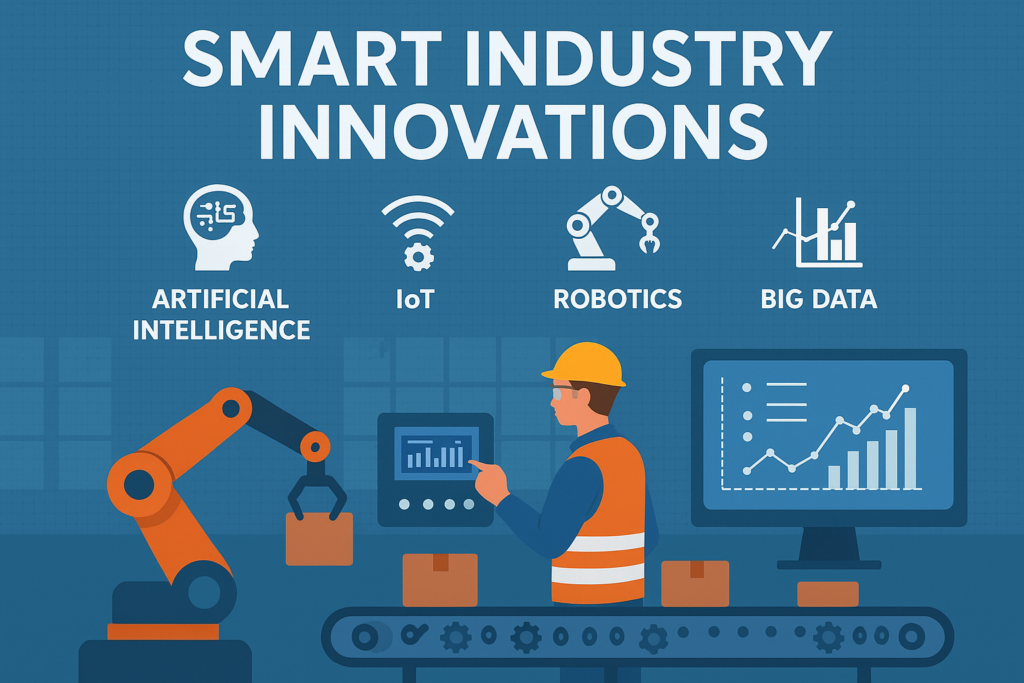
Introduction to Smart Industry Innovations
Smart industry innovations are revolutionizing the way industries operate across the globe. Also known as Industry 4.0 technologies, these innovations leverage advanced digital tools like Artificial Intelligence (AI), the Internet of Things (IoT), robotics, and big data analytics to enhance manufacturing, supply chains, and operational efficiency. By integrating these technologies, companies can reduce costs, improve productivity, and respond faster to market demands.
Why smart industry innovations matter:
- Efficiency: Automated systems and AI-driven processes reduce downtime and optimize production workflows.
- Quality: Advanced sensors and predictive analytics enhance quality control and reduce defects.
- Safety: IoT-enabled monitoring systems can prevent accidents and ensure worker safety.
- Sustainability: Smart technologies allow industries to lower energy consumption and adopt greener practices.
Key Technologies Driving Smart Industry Innovations
- Artificial Intelligence (AI): AI enables predictive maintenance, improves production scheduling, and optimizes resource allocation. It allows factories to anticipate equipment failures and improve operational efficiency.
- IoT and Connected Devices: IoT sensors collect real-time data from machinery, allowing managers to make data-driven decisions quickly. Smart devices also support remote monitoring and maintenance.
- Robotics and Automation: Automated robots handle repetitive tasks with precision and speed, freeing human workers for more complex, creative activities.
- Big Data and Analytics: By analyzing vast amounts of production data, businesses can uncover inefficiencies, reduce waste, and improve decision-making.
Case Study:
A leading automotive manufacturer implemented AI-driven predictive maintenance and IoT sensors across its assembly lines. The result: a 20% reduction in machine downtime and a 15% increase in overall productivity within the first year.
Impact on Global Industries
Smart industry innovations are not limited to manufacturing. They are transforming sectors such as logistics, energy, healthcare, and pharmaceuticals. By adopting these technologies, companies can gain a competitive edge, improve operational resilience, and innovate faster than ever before.
Key Technologies Behind Smart Industry Innovations
The backbone of smart industry innovations lies in a suite of advanced technologies that work together to transform traditional industrial operations into highly efficient, data-driven, and automated systems. Understanding these technologies is crucial for businesses looking to implement smart solutions effectively.
Artificial Intelligence (AI) in Smart Industry
Artificial Intelligence (AI) is at the forefront of industrial transformation. AI uses machine learning algorithms and data analysis to make predictive decisions, optimize processes, and enhance operational efficiency.
Key Applications of AI in Smart Industry Innovations:
- Predictive Maintenance: AI algorithms analyze data from machinery sensors to predict potential failures before they happen, reducing costly downtime.
- Quality Control: Computer vision systems powered by AI inspect products in real-time, detecting defects faster and more accurately than human inspectors.
- Production Optimization: AI optimizes workflow, inventory, and resource allocation to maximize productivity.
- Energy Management: AI systems monitor energy consumption patterns to identify inefficiencies and reduce costs.
Fact: According to a report by PwC, AI-powered predictive maintenance can reduce maintenance costs by up to 30% and equipment downtime by 45%.
Internet of Things (IoT) and Smart Factories
The Internet of Things (IoT) connects machinery, sensors, and devices across industrial environments, enabling real-time data collection and remote monitoring. In a smart factory, IoT is essential for creating interconnected, intelligent systems.
Applications of IoT in Smart Industry Innovations:
- Real-Time Monitoring: Sensors track machine performance, temperature, and environmental conditions continuously.
- Data-Driven Decisions: IoT devices feed data into analytics platforms, enabling managers to make informed decisions instantly.
- Supply Chain Optimization: IoT tracking improves inventory management, logistics, and delivery scheduling.
Example: Siemens’ Amberg Electronics Plant uses IoT sensors and AI to track production in real-time. This integration has led to a 99.998% production accuracy rate, showcasing the power of IoT in smart manufacturing.
Robotics and Automation
Robotics is a key pillar of smart industry innovations, enabling repetitive, dangerous, or highly precise tasks to be handled by machines. Automation enhances productivity, reduces human error, and allows workers to focus on high-value activities.
Types of Robotics in Smart Industry:
- Collaborative Robots (Cobots): Work alongside humans safely to assist in assembly or material handling.
- Autonomous Mobile Robots (AMRs): Move goods across warehouses or factories with minimal human intervention.
- Industrial Arms: Execute repetitive tasks like welding, painting, or packaging with high precision.
Case Study: At a leading electronics manufacturer, integrating cobots on the assembly line reduced labor costs by 25% while increasing production output by 18%.
Big Data and Analytics
Smart industries generate enormous volumes of data from sensors, machines, and production lines. Big data analytics transforms this data into actionable insights, enabling better decision-making.
How Big Data Supports Smart Industry Innovations:
- Operational Efficiency: Identifies bottlenecks in production and suggests optimization strategies.
- Predictive Analysis: Forecasts maintenance needs, production demands, and market trends.
- Process Improvement: Analyzes patterns to reduce waste, energy consumption, and resource use.
Table: Benefits of Big Data in Smart Industry
| Benefit | Example | Impact |
|---|---|---|
| Predictive Maintenance | Machine failure alerts | Reduces downtime by up to 45% |
| Production Optimization | Workflow efficiency analysis | Increases output by 15-20% |
| Resource Management | Energy consumption tracking | Cuts energy costs by 10-15% |
Cloud Computing and Edge Computing
Cloud and edge computing enable industries to store, process, and analyze massive amounts of data efficiently. While cloud computing provides scalability and centralized management, edge computing processes data locally on-site for faster decision-making.
Applications:
- Real-time monitoring of production lines
- Data sharing across multiple plants globally
- AI-driven insights from local edge devices
Example: General Electric (GE) leverages edge computing for turbine monitoring, allowing instant data analysis on-site, which has reduced maintenance response time by 30%.
Benefits of Smart Industry Innovations
Implementing smart industry innovations offers industries significant advantages, from boosting productivity to improving safety and sustainability. Companies adopting these technologies often gain a competitive edge, making them more resilient and efficient in today’s fast-paced industrial landscape.
Increased Efficiency and Productivity
One of the most tangible benefits of smart industry innovations is enhanced efficiency. By integrating AI, IoT, and robotics, companies can automate repetitive tasks, streamline workflows, and optimize production processes.
Key Improvements Include:
- Reduced Downtime: Predictive maintenance powered by AI minimizes unexpected equipment failures.
- Faster Production: Automated machines and robots work continuously without fatigue.
- Optimized Resource Use: Smart sensors monitor materials and energy usage, reducing waste.
Fact: McKinsey reports that factories implementing Industry 4.0 technologies have seen productivity gains of 20-30% on average.
Example: Bosch implemented AI-powered production scheduling and automated quality control, resulting in 15% faster throughput and 10% lower production costs across multiple plants.
Improved Safety and Risk Management
Safety is a critical concern in industrial operations. Smart industry innovations enhance workplace safety by providing real-time monitoring and predictive insights.
How Smart Technologies Improve Safety:
- IoT Sensors: Detect hazardous conditions, such as overheating machinery or toxic gas leaks.
- Automated Equipment: Reduces human exposure to dangerous tasks.
- AI Risk Analysis: Predicts potential failures or safety incidents before they occur.
Example: A chemical manufacturing plant integrated IoT-enabled sensors and AI risk models, reducing workplace accidents by 35% within two years.
Sustainability and Environmental Impact
Sustainability is becoming increasingly important in modern industries. Smart industry innovations help companies reduce energy consumption, lower emissions, and adopt environmentally friendly processes.
Sustainable Practices Enabled by Smart Technologies:
- Energy Monitoring: AI optimizes power usage in factories.
- Waste Reduction: Sensors track material use and minimize scrap.
- Circular Manufacturing: IoT enables recycling and reuse of components.
Fact: According to the World Economic Forum, smart manufacturing technologies can reduce industrial energy consumption by 10-20%, contributing significantly to global sustainability goals.
Competitive Advantage for Businesses
Adopting smart industry innovations gives companies a strong competitive edge. By leveraging advanced technologies, businesses can respond faster to market changes, reduce costs, and create higher-quality products.
Advantages Include:
- Faster Time-to-Market: AI-driven planning accelerates product development.
- Customization: Smart factories enable mass customization to meet specific customer needs.
- Global Competitiveness: Companies using smart technologies are more adaptable in global markets.
Case Study: General Motors implemented advanced robotics and AI-driven supply chain management. The result was a 25% improvement in production efficiency and enhanced responsiveness to market demand, positioning GM as a leader in smart manufacturing.
Summary of Benefits
| Benefit | Impact | Example |
|---|---|---|
| Efficiency & Productivity | Reduce downtime, optimize workflows | Bosch automated production lines |
| Safety | Predict hazards, minimize accidents | Chemical plant IoT sensors |
| Sustainability | Reduce energy & material waste | Smart energy monitoring in factories |
| Competitive Advantage | Faster, flexible production | General Motors AI supply chain |
Real-World Applications of Smart Industry Innovations
Smart industry innovations are not just theoretical concepts—they are being applied across multiple sectors to transform operations, improve efficiency, and create value. From manufacturing to healthcare, these technologies are shaping the industries of tomorrow.
Smart Manufacturing
Smart manufacturing is at the core of smart industry innovations. By integrating AI, IoT, robotics, and analytics, factories become more efficient, flexible, and precise.
Applications:
- Automated Assembly Lines: Robots and AI handle repetitive tasks such as welding, painting, and packaging.
- Real-Time Monitoring: IoT sensors track production metrics to detect anomalies immediately.
- Flexible Production: Smart factories can adjust production schedules quickly based on demand changes.
Case Study: At Adidas, a “Speedfactory” uses robotics and AI to produce sneakers locally, reducing production time from months to just a few weeks while allowing customization for individual customers.
Supply Chain and Logistics
Smart industry innovations are revolutionizing the way goods are produced, stored, and delivered. IoT, AI, and big data analytics are crucial for supply chain optimization.
Applications:
- Inventory Management: IoT sensors monitor stock levels in real-time, reducing overstock and shortages.
- AI Demand Forecasting: Predicts customer demand, helping businesses plan production and reduce waste.
- Logistics Optimization: Autonomous vehicles and AI route planning improve delivery speed and reduce costs.
Example: DHL implemented AI-driven route optimization and warehouse automation, reducing delivery times by 20% and increasing warehouse throughput by 30%.
Energy and Utilities
Smart industry innovations play a significant role in energy production and utility management, making operations safer and more sustainable.
Applications:
- Smart Grids: IoT-enabled grids monitor energy distribution, detect outages, and improve efficiency.
- Predictive Maintenance: AI monitors turbines, boilers, and other equipment to prevent failures.
- Energy Optimization: AI algorithms reduce energy consumption and carbon emissions.
Fact: According to the International Energy Agency (IEA), integrating smart industry innovations into power plants can improve energy efficiency by up to 15%.
Healthcare and Pharmaceuticals
Healthcare and pharmaceutical manufacturing benefit from smart industry innovations through automation, AI, and precision monitoring.
Applications:
- Drug Manufacturing: Robotics and AI ensure high precision and reduce errors in production.
- Supply Chain Management: IoT tracks pharmaceutical shipments to ensure quality and safety.
- Medical Device Production: Automated assembly improves consistency and reduces contamination risks.
Case Study: Pfizer uses automated production lines and AI analytics for vaccine manufacturing, ensuring high-quality output at scale while speeding up distribution.
Other Emerging Applications
- Food and Beverage Industry: Smart sensors monitor food quality and optimize processing.
- Aerospace: AI and IoT track equipment health and maintenance needs.
- Automotive: Smart factories and autonomous robots reduce production time and improve precision.
Challenges in Implementing Smart Industry Innovations
While smart industry innovations offer enormous benefits, adopting these technologies is not without challenges. Businesses must navigate financial, technical, and workforce-related hurdles to implement smart solutions effectively.
High Initial Costs
One of the main barriers to adopting smart industry innovations is the significant upfront investment required for advanced machinery, IoT sensors, AI systems, and robotics.
Considerations:
- Equipment Costs: Upgrading legacy machines or purchasing new automated equipment can be expensive.
- Software and Licensing Fees: AI platforms, analytics software, and IoT management tools often come with recurring costs.
- Return on Investment (ROI): Companies must carefully evaluate whether the long-term efficiency gains justify the initial expenses.
Fact: According to Deloitte, 40% of manufacturers cite high initial costs as the top barrier to adopting Industry 4.0 technologies.
Strategy: Businesses can adopt a phased approach, starting with pilot projects in specific areas to test ROI before scaling implementation.
Data Security and Privacy Concerns
With the increased connectivity of smart factories and IoT devices, cybersecurity risks become a major concern.
Key Risks:
- Hacking and Cyberattacks: Industrial networks can be targeted, leading to operational disruptions.
- Data Breaches: Sensitive operational and customer data may be compromised.
- Compliance Challenges: Businesses must meet data privacy regulations in different regions.
Example: A cyberattack on a manufacturing plant in 2021 halted production for several days, highlighting the vulnerability of connected industrial systems.
Solution: Implement robust cybersecurity protocols, including encrypted communications, network segmentation, and continuous monitoring of industrial IoT systems.
Workforce Adaptation and Skills Gap
Implementing smart industry innovations often requires a workforce with new digital skills, which can create a skills gap.
Challenges:
- Training Needs: Employees must be trained to work with AI systems, robots, and IoT devices.
- Resistance to Change: Some workers may be hesitant to adopt new technologies.
- Talent Shortage: There is high demand for engineers and specialists in AI, robotics, and data analytics.
Strategy: Invest in upskilling programs and continuous learning initiatives to prepare the workforce for Industry 4.0 technologies.
Quote: Klaus Schwab, Founder of the World Economic Forum, says, “The Fourth Industrial Revolution will require new skills, education, and lifelong learning for workers to thrive in an increasingly automated world.”
Integration with Legacy Systems
Many industrial facilities rely on legacy equipment that was not designed to connect to digital networks. Integrating these systems with smart technologies can be complex.
Challenges:
- Compatibility issues between old and new equipment
- Data inconsistencies from different machines
- Increased maintenance complexity during the integration phase
Solution: Use retrofit sensors and middleware platforms to bridge the gap between legacy machinery and new smart systems, enabling a smooth digital transformation.
Summary of Challenges
| Challenge | Impact | Solution |
|---|---|---|
| High Costs | Barrier to adoption | Start with pilot projects and phased implementation |
| Cybersecurity Risks | Operational disruptions | Encrypted networks, continuous monitoring |
| Workforce Skills Gap | Resistance & inefficiency | Upskilling programs, training initiatives |
| Legacy System Integration | Compatibility issues | Retrofit sensors, middleware platforms |
Future Trends in Smart Industry Innovations
As smart industry innovations continue to evolve, businesses must stay ahead of emerging trends to maintain a competitive edge. The future of smart industries is shaped by AI-driven automation, human-centric approaches, sustainability, and global adoption of advanced technologies.
AI-Driven Autonomous Factories
The next generation of factories will be fully autonomous, powered by AI, robotics, and IoT systems. These factories can operate with minimal human intervention, improving efficiency and reducing errors.
Key Features:
- Predictive Self-Maintenance: Machines detect potential failures and perform self-repairs automatically.
- Automated Decision-Making: AI systems optimize production schedules and resource allocation in real-time.
- Continuous Production: 24/7 operations with minimal downtime, increasing output and reducing costs.
Case Study: Fanuc, a leading robotics company, has developed smart factories where robots manage production lines autonomously, achieving over 90% operational efficiency.
Industry 5.0: Human-Centric Innovations
While Industry 4.0 focuses on automation and efficiency, Industry 5.0 emphasizes human-machine collaboration. This approach combines the precision of machines with human creativity and expertise.
Key Elements:
- Collaborative Robots (Cobots): Work alongside humans, assisting rather than replacing them.
- Mass Customization: Smart factories can produce personalized products while maintaining high efficiency.
- Enhanced Job Roles: Employees focus on creativity, problem-solving, and innovation rather than repetitive tasks.
Quote: According to the European Commission, “Industry 5.0 represents a shift towards sustainability, resilience, and human-centric production, where humans and machines collaborate harmoniously.”
Sustainable and Green Smart Industries
Sustainability is becoming a core priority for smart industry innovations. Future factories will focus on energy efficiency, circular manufacturing, and reducing environmental impact.
Sustainable Practices:
- Circular Economy: Recycling and reusing materials within production cycles.
- Renewable Energy Integration: Factories powered by solar, wind, or other renewable sources.
- Eco-Friendly Design: Smart sensors and AI reduce energy consumption and material waste.
Fact: A McKinsey study predicts that smart, sustainable manufacturing could cut industrial carbon emissions by up to 25% over the next decade.
Global Adoption and Market Forecast
The adoption of smart industry innovations is accelerating worldwide, with varying trends across regions.
Key Insights:
- North America & Europe: Leading in AI and robotics adoption for advanced manufacturing.
- Asia-Pacific: Rapid growth in IoT-enabled factories, particularly in China, Japan, and South Korea.
- Emerging Markets: Gradual adoption with focus on supply chain optimization and energy efficiency.
Market Forecast: According to MarketsandMarkets, the global smart manufacturing market is projected to reach $400 billion by 2027, growing at a CAGR of 12.4%.
How to Get Started with Smart Industry Innovations
Adopting smart industry innovations requires careful planning and a strategic approach. Businesses must assess their needs, choose the right technologies, and implement solutions in a phased, manageable way.
Assessing Business Needs
Before implementing any smart technologies, it’s critical to evaluate your current operations and identify areas that will benefit most.
Steps to Assess Needs:
- Process Analysis: Examine workflows, production lines, and supply chains to identify inefficiencies.
- Pain Point Identification: Determine areas with high downtime, defects, or energy waste.
- Goal Setting: Define clear objectives, such as increasing productivity, reducing costs, or improving sustainability.
Tip: Focus on areas where smart industry innovations can generate measurable impact before scaling to the entire facility.
Choosing the Right Technologies
Selecting the appropriate technology is crucial for successful implementation. Not all innovations suit every industry or operation.
Considerations:
- AI & Analytics: Ideal for predictive maintenance, quality control, and production optimization.
- IoT Devices: Best for real-time monitoring and data collection.
- Robotics & Automation: Useful for repetitive or dangerous tasks.
- Cloud & Edge Computing: Necessary for data processing, scalability, and remote operations.
Case Study: A mid-sized electronics manufacturer implemented IoT sensors on high-maintenance equipment first. After observing significant improvements in uptime and efficiency, they expanded AI and robotics solutions across the production line.
Implementation Strategy
A phased adoption strategy reduces risk and ensures smoother integration of smart industry innovations.
Recommended Approach:
- Pilot Projects: Test new technologies on a small scale to validate ROI.
- Employee Training: Upskill staff to operate and manage new systems effectively.
- Integration with Legacy Systems: Use retrofitting or middleware to connect old machinery to smart networks.
- Continuous Monitoring: Track metrics and adjust strategies as needed.
Fact: Companies using phased implementation for Industry 4.0 technologies reported 30% faster adoption and fewer operational disruptions compared to full-scale rollouts.
Measuring ROI and Success
Tracking the return on investment (ROI) is critical to ensure that smart industry innovations deliver value.
Key Metrics to Monitor:
- Operational Efficiency: Production throughput, cycle times, and machine uptime.
- Cost Savings: Reduction in labor, energy, and maintenance costs.
- Quality Metrics: Product defect rates and customer satisfaction.
- Sustainability Impact: Energy usage, emissions reduction, and material waste.
Tip: Use dashboards and analytics platforms to continuously monitor these metrics for data-driven decision-making.
Summary: Getting Started
| Step | Action | Outcome |
|---|---|---|
| Assess Needs | Analyze workflows and pain points | Identify opportunities for impact |
| Choose Technology | Select AI, IoT, robotics, cloud solutions | Align solutions with business goals |
| Implement Strategically | Pilot projects, train staff, integrate systems | Reduce risks and ensure smooth adoption |
| Measure ROI | Track efficiency, cost savings, quality, sustainability | Validate benefits and optimize processes |
Frequently Asked Questions About Smart Industry Innovations
To provide maximum value to readers and target featured snippets, here are common questions about smart industry innovations with clear, concise answers.
1. What are the top examples of smart industry innovations?
Top examples include:
- AI-Powered Predictive Maintenance: Machines detect potential failures before they occur.
- IoT-Enabled Smart Factories: Real-time monitoring of production lines and inventory.
- Collaborative Robots (Cobots): Robots working alongside humans to improve productivity.
- Automated Quality Control: AI-driven systems inspect products for defects.
- Big Data Analytics: Optimizing workflow, reducing waste, and improving efficiency.
Fact: Companies like Siemens, Bosch, and Adidas have successfully implemented these innovations to achieve higher efficiency and product quality.
2. How do smart factories differ from traditional factories?
Smart factories integrate digital technologies, IoT, AI, and robotics to create interconnected, data-driven systems.
Key Differences:
| Feature | Traditional Factory | Smart Factory |
|---|---|---|
| Monitoring | Manual, periodic | Real-time, automated |
| Decision Making | Human-based | AI-driven and predictive |
| Efficiency | Reactive | Optimized and proactive |
| Flexibility | Limited | Adjustable to demand changes |
| Safety | Manual supervision | IoT sensors & automation reduce risk |
Benefit: Smart factories improve productivity, reduce costs, and enable faster responses to market changes.
3. Can small businesses implement smart industry technologies?
Yes, small and medium-sized enterprises (SMEs) can adopt smart industry innovations in a phased and cost-effective way:
- Start with IoT sensors or cloud-based analytics for critical processes.
- Use AI-powered software for predictive maintenance or inventory optimization.
- Implement automation in high-repetition tasks.
Tip: Pilot projects allow SMEs to measure ROI before scaling technology adoption.
4. What are the main challenges of smart industry adoption?
Key challenges include:
- High initial costs for equipment and software
- Workforce skills gap and need for training
- Integration with legacy systems
- Data security and cybersecurity risks
Solution: Use a phased implementation, invest in upskilling, and employ robust cybersecurity protocols.
5. How does AI improve manufacturing efficiency?
AI improves efficiency by:
- Predicting maintenance needs to avoid downtime
- Optimizing production schedules for maximum throughput
- Analyzing data to identify bottlenecks and resource inefficiencies
- Reducing waste through better process control
Fact: AI adoption in manufacturing has been shown to increase productivity by 20-30% in leading factories.
6. What role does IoT play in modern industry?
IoT connects machines, sensors, and systems for real-time monitoring and decision-making.
Key Roles:
- Track equipment performance and maintenance needs
- Monitor inventory and supply chains
- Enable predictive analytics and data-driven insights
- Support automation and smart production lines
Example: DHL uses IoT-enabled warehouses for real-time tracking of inventory, improving throughput by 30%.
Conclusion: Embracing Smart Industry Innovations for the Future
Smart industry innovations are transforming the way businesses operate, creating a new era of efficient, data-driven, and sustainable industrial processes. From AI and IoT to robotics, big data, and automation, these technologies enable companies to increase productivity, improve quality, reduce costs, and remain competitive in a rapidly changing market.
Key Takeaways:
- Efficiency and Productivity: AI and automation streamline workflows, minimize downtime, and optimize resource use.
- Safety and Risk Management: IoT and predictive analytics enhance workplace safety and prevent operational disruptions.
- Sustainability: Smart factories adopt eco-friendly practices, reduce energy consumption, and support the circular economy.
- Global Competitiveness: Companies leveraging smart industry innovations gain a clear edge in responsiveness, quality, and innovation.
- Future-Proofing: Emerging trends like Industry 5.0, autonomous factories, and green manufacturing ensure businesses remain adaptable and resilient.
Final Thought: Implementing smart industry innovations is no longer optional—it’s essential for businesses that want to thrive in the Fourth Industrial Revolution and beyond. By assessing needs, choosing the right technologies, and strategically implementing solutions, companies of all sizes can unlock the full potential of smart industry innovations.
Call to Action:
Businesses ready to embrace the future should start by analyzing their operations, investing in pilot projects, and upskilling their workforce. With careful planning and adoption of advanced technologies, the benefits of smart industry innovations are tangible and transformative.