
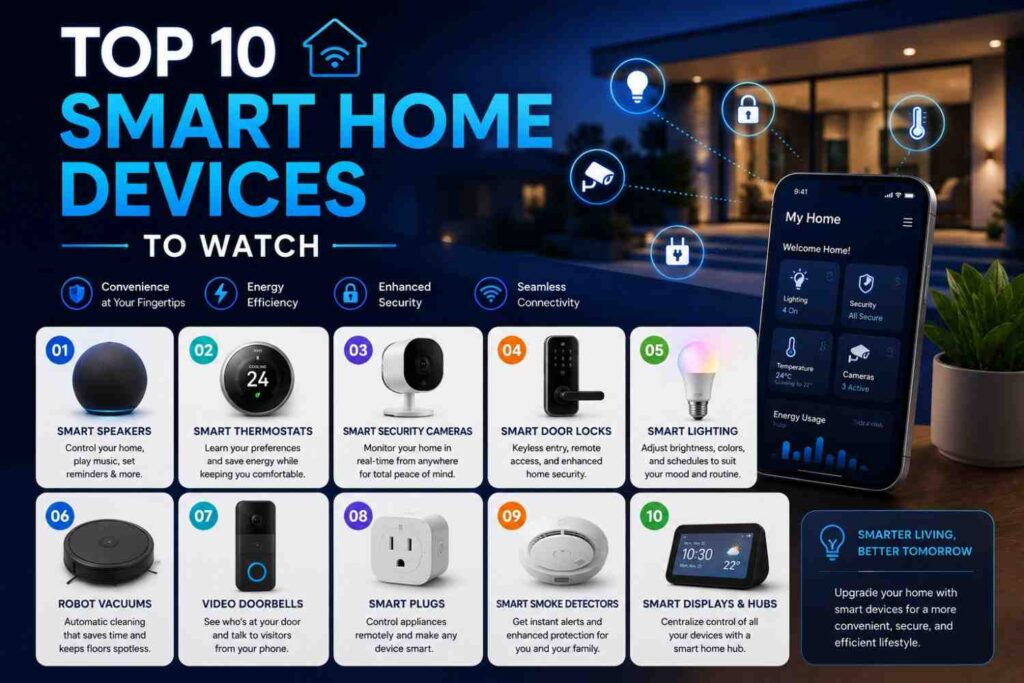
Top 10 Smart Home Devices to Watch for a modern connected home
Smart home technology has become a practical part of modern living. It is no longer only about luxury gadgets or voice-controlled lights. Today, smart home devices can help people manage security, save energy, clean floors, monitor leaks, improve air quality, and control everyday routines from a phone.
The Top 10 Smart Home Devices to Watch are important because the smart home market is becoming more useful and more connected. Newer devices are focusing on compatibility, privacy, automation, and energy awareness. Standards like Matter and Thread are also helping different brands work together more smoothly.
If you are planning to upgrade your home, I recommend starting with devices that solve daily problems. A smart lock can improve access control. A smart thermostat can help manage comfort and energy use. A smart camera can improve home monitoring. A smart plug can make a normal appliance easier to control.
Why Smart Home Devices Are Worth Watching
Smart home devices are worth watching because they are moving from simple convenience tools to practical home management systems. In the past, many people bought smart gadgets only for fun. Now, buyers are looking for devices that offer security, energy savings, automation, comfort, and long-term value. This shift makes smart home technology more useful for families, apartment owners, homeowners, renters, and even small offices.
Another reason these devices matter is compatibility. Many users used to worry that one brand would not work with another. With the growth of Matter smart home devices and Thread-based connectivity, the industry is moving toward easier setup and better device communication. This does not mean every device is perfect, but it does mean buyers now have better options than before.
Smart homes are becoming more practical
A practical smart home is not built around random gadgets. It is built around daily needs. For example, a smart thermostat helps control indoor temperature. A video doorbell helps you see who is at the door. A water leak detector helps alert you before a small leak becomes a bigger problem.
This is why the best smart home devices are often simple. They do one job well and make daily life easier. A device becomes valuable when it saves time, reduces worry, or gives better control over the home.
Compatibility is now a major buying factor
Compatibility is one of the biggest reasons people research smart home devices before buying. If a device does not work with your preferred platform, it can become frustrating. Many users want devices that work with Alexa, Google Home, Apple Home, or Samsung SmartThings.
Matter was created to improve interoperability between smart home products. Thread is also important because it is designed for low-power smart home devices and mesh connectivity. When buying new connected home devices, checking Matter and Thread support can help make your setup more future-ready.
Security and privacy are now part of the decision
Smart home security is not only about cameras and locks. It also includes account protection, firmware updates, app permissions, cloud storage, and data privacy. A cheap camera may look attractive, but it should still come from a trusted brand with clear security practices.
Before buying any smart device, I always suggest checking three things: whether the brand offers updates, whether the app has strong security options, and whether privacy settings are easy to understand. This matters most for cameras, locks, microphones, and sensors.
Top 10 Smart Home Devices to Watch
The Top 10 Smart Home Devices to Watch cover the most useful categories in modern home automation. These are not only trendy gadgets. They are devices that can improve daily living when chosen carefully. Some are best for beginners, while others are better for people who already have a connected home setup.
This list focuses on device categories rather than fake rankings or invented product claims. Prices, features, and availability change often, so it is better to understand which type of device is useful before choosing a specific model. The goal is to help you make a smart buying decision based on purpose, compatibility, and long-term value.
1. Smart home hubs and smart displays
A smart home hub or smart display works as the control center of your connected home. It can help manage lights, locks, cameras, thermostats, sensors, plugs, and routines from one place. Many users also use smart displays for video calls, reminders, music, recipes, and voice control.
A hub becomes more important when you use several home automation devices. It can reduce app switching and help devices work together. If you are buying new devices, check whether your hub supports Matter, Wi-Fi, Bluetooth, or Thread. This can make future upgrades easier.
2. Smart security cameras and video doorbells
Smart security cameras and video doorbells are among the most popular smart home gadgets because they solve a clear problem: home monitoring. They let users check entrances, driveways, rooms, deliveries, and outdoor areas from a mobile app.
When choosing a smart security camera, look at video quality, night vision, motion alerts, privacy zones, storage options, and subscription fees. For video doorbells, also check whether your home supports wired installation or needs a battery-powered model. A good camera should make security easier, not create constant false alerts.
3. Smart thermostats and energy devices
Smart thermostats help manage heating and cooling more efficiently. They can learn schedules, adjust temperatures remotely, and reduce energy use when the home is empty. ENERGY STAR says certified smart thermostats are independently verified using field data and can help deliver energy savings.
Smart energy devices are also becoming more important. These include smart plugs with energy monitoring, smart panels, connected heat pumps, battery systems, and solar-related tools. For many homes, energy-focused smart devices may provide more long-term value than entertainment-based gadgets.
4. Smart locks and access control devices
Smart locks help users manage home access without relying only on physical keys. They may support keypad entry, mobile app unlocking, temporary codes, auto-locking, or fingerprint access, depending on the model.
This is especially useful for families, rental properties, shared homes, and people who often need to give limited access to guests or service providers. A smart lock should be chosen carefully. Look for backup access, battery alerts, strong build quality, and trusted security features.
5. Robot vacuums and smart cleaning devices
Robot vacuums are useful for people who want cleaner floors with less manual effort. Many modern models offer room mapping, no-go zones, scheduled cleaning, mopping, self-emptying docks, and app-based control.
A robot vacuum is not perfect for every home, but it can save time in busy households. Before buying one, check your flooring type, pet hair needs, furniture layout, dustbin size, and maintenance cost. For homes with children or pets, obstacle detection can also be an important feature.
6. Smart lighting and smart switches
Smart lighting is one of the easiest ways to start home automation. Users can control brightness, color temperature, schedules, scenes, and motion-based routines. Smart lighting can also improve comfort by matching light levels to work, relaxation, reading, or sleep.
Smart switches are often better than smart bulbs for full-room control. They allow people to use the wall switch normally while still getting app and voice control. In my experience, smart switches are better for families because guests and children can use them without learning an app.
7. Smart plugs and smart power strips
Smart plugs are simple, affordable, and beginner-friendly. They can turn normal lamps, fans, chargers, and small appliances into app-controlled devices. Some models also include energy monitoring, which helps users understand how much power certain devices use.
A smart plug is a good first step for anyone who wants to try smart home technology without spending too much. However, users should always check the load rating and avoid plugging in high-power appliances unless the plug is clearly rated for that use.
8. Water leak detectors and smart shutoff systems
Water leak detectors are small devices, but they can be very useful. They can alert you when water is detected under sinks, near washing machines, behind toilets, near water heaters, or in basements.
Smart shutoff systems go one step further by helping stop water flow when a leak is detected. This category is worth watching because it focuses on prevention. A small sensor in the right place can help reduce the risk of costly water damage.
9. Smart air quality monitors and purifiers
Smart air quality monitors help users understand indoor air conditions. Depending on the device, they may track particles, humidity, temperature, carbon dioxide, or volatile organic compounds. Smart air purifiers can then adjust fan speed automatically based on air quality readings.
These devices are useful for homes with pets, dust, allergies, cooking odors, or poor outdoor air. Before buying, check what the device actually measures. Not every monitor tracks the same air quality factors, so the details matter.
10. Smart appliances and connected home systems
Smart appliances include connected refrigerators, ovens, washing machines, dryers, dishwashers, and other large home devices. These products may offer remote alerts, maintenance reminders, energy reporting, and app-based controls.
I do not recommend replacing a working appliance only for smart features. But when buying a new appliance, connected features can add value if they solve real problems. Useful features include cycle alerts, energy insights, leak warnings, remote diagnostics, and maintenance reminders.
Smart Home Device Comparison Table
A comparison table makes it easier to understand which devices are best for different needs. Not every smart home device is suitable for every user. Some devices are ideal for beginners, while others are better for advanced users who already have a smart home ecosystem.
When comparing the Top 10 Smart Home Devices to Watch, focus on purpose first. Ask whether the device improves security, saves time, reduces energy waste, prevents damage, or improves comfort. A useful smart home setup should feel simple, not overwhelming.
Quick comparison of smart home device categories
| Device Category | Best For | Main Benefit | What to Check Before Buying |
|---|---|---|---|
| Smart home hub | Whole-home control | Central control and automation | Matter, Thread, and ecosystem support |
| Security camera | Home monitoring | Video alerts and live view | Storage, privacy, and subscription fees |
| Video doorbell | Front-door security | Visitor and delivery alerts | Wired or battery setup |
| Smart thermostat | Energy control | Temperature automation | HVAC compatibility |
| Smart lock | Access control | Keyless entry and codes | Backup access and battery life |
| Robot vacuum | Cleaning | Scheduled floor cleaning | Mapping, floor type, and maintenance |
| Smart lighting | Comfort and automation | Scenes and schedules | Bulb or switch setup |
| Smart plug | Beginner automation | Remote power control | Load rating and safety |
| Leak detector | Water safety | Early leak alerts | Placement and app alerts |
| Air quality device | Indoor wellness | Air monitoring and purification | Sensor type and filter cost |
Best smart home devices for beginners
For beginners, the best smart home devices are smart plugs, smart bulbs, smart speakers, video doorbells, and basic sensors. These devices are easy to install and help users understand how automation works.
A beginner should not buy too many devices at once. Start with one room or one problem. For example, automate bedroom lights, add a smart plug to a lamp, or install a video doorbell at the front door. Once you understand the system, you can expand slowly.
Best smart home devices for long-term value
For long-term value, smart thermostats, smart locks, leak detectors, security cameras, and energy monitoring devices are strong choices. These devices solve important problems and may be used daily.
Long-term value also depends on software support. A device with better updates, privacy controls, and ecosystem compatibility is often more useful than a cheaper device with weak support.
How to Choose the Best Smart Home Devices
Choosing the best smart home devices should not be rushed. A smart home works best when every device has a clear purpose. Many people make the mistake of buying popular gadgets without checking whether they fit their home, internet setup, or daily routine.
Before buying, think about your main goal. Do you want better security? Lower energy use? Easier cleaning? Better lighting? Voice control? Once you know the goal, it becomes easier to choose the right device category and avoid wasting money.
Start with your main problem
The first step is to identify the problem you want to solve. If you want better security, start with a camera, video doorbell, or smart lock. If you want lower energy use, start with a smart thermostat or energy-monitoring plug.
This approach keeps your setup focused. A smart home should make your life easier. It should not become a collection of devices you barely use.
Check platform and device compatibility
Compatibility should always be checked before buying. Some devices work with Alexa, some work with Google Home, some work with Apple Home, and some support multiple platforms. Matter can help with interoperability, but users should still check official compatibility details.
Also check whether the device needs a hub, bridge, or Thread border router. This is especially important for Thread-based devices and some sensors.
Review privacy and update support
Privacy is important because smart home devices may collect sensitive information. Cameras may record video. Speakers may process voice commands. Locks may store access history. Apps may collect usage data.
Choose brands that explain their privacy policies clearly. Also check whether the device receives firmware updates. A smart device without updates can become a security risk over time.
Step-by-Step Smart Home Setup Guide
A smart home should be built in stages. This makes the setup easier to manage and reduces confusion. Instead of buying ten devices at once, start with your main ecosystem, then add devices room by room.
A step-by-step setup is also better for troubleshooting. If one device does not work properly, it is easier to identify the problem when the system is still simple. This approach is useful for beginners and advanced users alike.
Step 1: Choose your smart home ecosystem
Choose the platform you plan to use most often. This could be Alexa, Google Home, Apple Home, Samsung SmartThings, or another platform. Your choice will affect which devices work best with your setup.
The best ecosystem is usually the one that already fits your phone, speaker, display, or existing devices. Do not choose a platform only because it is popular. Choose the one that fits your daily routine.
Step 2: Start with one room or one use case
Start with one area of the home. Good starting points include the entryway, bedroom, living room, or kitchen. For example, you can add a video doorbell at the entrance, smart lights in the living room, or a smart plug in the bedroom.
Testing one area first helps you understand what works. After that, you can expand to more rooms and more advanced routines.
Step 3: Create simple routines
Smart routines make devices more useful. Common routines include turning off lights at bedtime, locking the door at night, adjusting the thermostat when you leave, and turning on lights when motion is detected.
Keep routines simple at first. Complex automations can fail if one device goes offline. A good routine should be easy to understand and easy to edit.
Common Mistakes to Avoid With Smart Home Devices
Many smart home problems happen because people buy too fast or set up too much at once. The technology is useful, but it needs planning. A good setup should be reliable, simple, and easy for everyone in the home to use.
Avoiding common mistakes can save money and frustration. It also helps protect privacy and security. This is especially important when using cameras, locks, microphones, and cloud-connected devices.
Buying devices only because they are cheap
A cheap device is not always a good deal. If it lacks updates, has weak privacy controls, or does not work with your platform, it may cause problems later. This is especially true for security cameras, smart locks, and unknown-brand devices.
Always compare support, compatibility, and reviews before buying. Price matters, but reliability matters more.
Ignoring Wi-Fi and network strength
Smart home devices need stable connectivity. Weak Wi-Fi can cause delayed alerts, offline devices, slow controls, and failed routines. Cameras need stronger connectivity than small sensors because video uses more bandwidth.
If you plan to use many connected home devices, check your router and coverage first. A strong network is the foundation of a reliable smart home.
Making automation too complicated
Automation should make life easier, not confusing. If a routine has too many triggers, conditions, and device dependencies, it may become unreliable. Simple routines are often better.
Start with basic automations, then improve them over time. A smart home should still work manually when needed.
Frequently Asked Questions
People often search for smart home devices because they want clear buying guidance before spending money. These FAQs answer common questions in simple language and help readers understand which devices are useful, safe, and beginner-friendly.
Quick Answer About Top 10 Smart Home Devices to Watch
The Top 10 Smart Home Devices to Watch include smart home hubs, AI security cameras, video doorbells, smart thermostats, smart locks, robot vacuums, smart lighting, smart plugs, water leak detectors, and smart air quality devices. These devices are worth watching because they improve security, comfort, energy control, cleaning, and daily convenience. In my experience, the best smart home devices are not always the most expensive. The right choice is the device that works with your home, supports your preferred platform, and solves a real problem without making your setup complicated.
What smart home device should I buy first?
The best first smart home device is usually a smart plug, smart bulb, smart speaker, or video doorbell. These devices are easy to install and simple to understand. If your main goal is energy control, a smart thermostat may be a better first choice.
Are Matter smart home devices better?
Matter smart home devices can be better for compatibility because Matter is designed to help devices work across different ecosystems. However, not every feature works the same on every platform. Always check official compatibility details before buying.
Do smart home devices save energy?
Some smart home devices can help save energy when used correctly. Smart thermostats, smart plugs with energy monitoring, smart lighting, and connected energy systems can reduce waste. Actual savings depend on the home, climate, habits, and device settings.
Are smart home devices safe to use?
Smart home devices can be safe when users choose trusted brands, update firmware, use strong passwords, enable two-factor authentication, and review privacy settings. Cameras, locks, and speakers need extra care because they handle sensitive home data.
Do I need a hub for smart home devices?
Some smart home devices work directly through Wi-Fi, while others need a hub, bridge, or Thread border router. If you are buying Matter over Thread devices, you may need a compatible Thread border router for proper setup.
What are the best smart home devices for apartments?
Good apartment-friendly devices include smart plugs, smart bulbs, indoor cameras, video doorbells where allowed, leak detectors, air quality monitors, and robot vacuums. Avoid hardwired devices unless your landlord or building rules allow installation.
Conclusion
The Top 10 Smart Home Devices to Watch show how modern homes are becoming more connected, practical, and automated. The best smart home devices are not just trendy gadgets. They solve real problems such as security, energy control, cleaning, lighting, air quality, and home safety.
A smart home should be built slowly and carefully. Start with your main need, choose compatible devices, and keep privacy in mind. In my experience, the most successful setups are simple, reliable, and easy for everyone in the home to use.
Final recommendation
If you are just starting, begin with a smart plug, smart light, video doorbell, or smart speaker. If you want long-term value, consider a smart thermostat, smart lock, water leak detector, or smart security camera. The right device is the one that fits your home and daily routine.